Think about the last time you paid for a service or signed up for a new tool. You might have clicked an ad just before buying. By then, you may already have read a review, heard a recommendation, or visited the company’s website. The ad gave you a way to act. The things you’d seen and heard earlier helped you decide whether to trust the business.
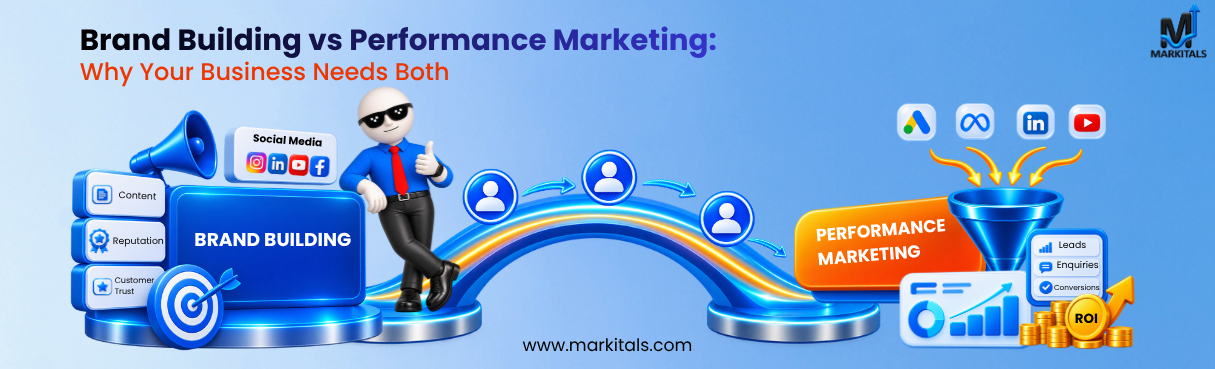
That’s the difference between brand building and performance marketing. Brand building shapes what people know and remember about you. Performance marketing gives people a clear next step and helps you measure how many take it. Understanding both makes it easier to decide what your marketing needs to do next.
What Is Brand Building?
Brand building is the work of giving people a clear idea of who you are, what you do well, and why they should consider you. Your name and visual identity help people recognize you. Your website, reviews, content, and customer experience give them reasons to remember and trust you.
Start by asking what you want a customer to say when they recommend your business. Maybe it’s “They made a complicated process easy to understand” or “They kept us informed the whole way.” That’s more useful than a broad promise about quality because it tells people what working with you actually feels like. You can back it up with a customer story, a clear explanation of your process, or a review that describes the experience.
Brand building happens every time someone comes across your business. A helpful guide can show what your team knows. A clear answer to an enquiry can show how your team works. Over time, those experiences give people a better sense of what they can expect from you.
What Is Performance Marketing?
Performance marketing uses campaigns to encourage a specific action you can measure. That could be a phone call, a quote request, a demo booking, or a purchase. You decide what action matters before you launch, then use the results to see what needs improving.
A paid search campaign, for example, might send people to a page where they can request a quote. You can measure how many visitors submit the form. If your sales team records which requests are a good fit and which turn into customers, you can also see whether the campaign is bringing in the kind of business you want.
That distinction matters when you compare campaigns. A campaign that brings in 40 enquiries may look better than one that brings in 20. If the second campaign produces more sales from a similar budget, it’s worth looking at what made those enquiries more likely to convert. Lead volume tells you how many people responded. Lead quality tells you how many were a good fit.
Brand Building vs Performance Marketing at a Glance
| Brand building | Performance marketing | |
|---|---|---|
Main goal |
Help people recognize, understand, and trust your business |
Encourage a measurable action |
Customer question | “Why should I consider this business?” | “What should I do next?” |
Common activities | Helpful content, customer stories, reviews, and awareness campaigns | Paid search, lead generation ads, and landing page tests |
What to measure | Reach among the right audience, searches for your business name, and customer feedback | Qualified enquiries, bookings, sales, and the cost of getting them |
When to review | Look for trends over time | Review once the campaign has enough data to guide a decision |
A channel can serve either goal. A LinkedIn ad that shares a useful industry guide can introduce your business to new buyers. A LinkedIn ad that invites buyers to book a demo can be measured by how many qualified demos it brings in. Decide what you want the campaign to do, then choose the measure that fits.
Why Your Business Needs Both
People need a reason to choose you
An ad can bring someone to your website. Once they arrive, they still have to decide whether you’re a good fit. A clear explanation of who you serve, proof that you’ve solved similar problems, and a straightforward description of your process can help them make that decision. See how Markitals applied this in our case study on building trust through a unified brand presence.
The proof should match the decision the customer is making. Someone comparing software may want to see how it fits into their team’s workflow. A buyer choosing a supplier may want to know whether it can meet their requirements and deliver on time. Showing the information buyers need makes your marketing more helpful at the point they’re deciding.
Interested buyers need a clear next step
Someone can understand what you offer and still leave if they have to hunt for a way to contact you. Make the next step easy to find, and explain what happens after they take it. If you ask people to book a consultation, tell them what you’ll cover. If you ask them to request a quote, tell them what details they’ll need to share.
The experience continues after the form is submitted. A campaign might generate good enquiries, yet few become appointments if people wait too long for a reply or find scheduling difficult. Our Speed to Lead case study shows why it’s worth looking at what happens after the enquiry.
Campaigns and sales conversations tell you what to explain better
Campaign results show which messages get people to respond. Sales conversations help you understand what they still need to know. If prospects often ask what’s included, how long setup takes, or whether your service fits their needs, those questions can guide what you add to your website, ads, and content.
The same feedback can help explain a campaign result. If an ad gets plenty of clicks but attracts people looking for a service you don’t offer, the wording may need to be more specific. Listening to the people who speak with prospects helps you see the story behind the numbers.
How to Build a Plan That Uses Both
1. Find where people are getting stuck
Pick one product or service and follow the customer journey from awareness to sale. If few people in your target market know you exist, start by making your work easier to discover. If people visit your website but rarely enquire, look at whether the page answers their questions and makes the next step clear. If enquiries come in but rarely become sales, check lead quality and follow-up.
2. Carry one clear promise through your marketing
Decide what you want customers to understand about your offer. Then make sure your ad, website, and sales team give them the same answer. If your campaign promises an easier setup, your landing page can show what setup involves, and your sales team can explain what support the customer will get. Each step adds detail while keeping the message consistent.
3. Track what matters at each stage
For brand building, look at whether you’re reaching the right people and whether more of them are searching for your business by name. For performance marketing, look at how many qualified leads, bookings, or sales a campaign produces and what those outcomes cost.
Read those numbers alongside what customers tell you. An ad may get credit for the final click even when a recommendation or a useful article influenced the decision earlier. Asking new customers where they first heard about you can help fill in some of that history.
4. Put more budget where the business needs it most
If you’re entering a new market, people may need more opportunities to see your work before they consider buying. If you already have steady demand and need more enquiries soon, a targeted campaign may deserve more of the budget. Revisit the split as you learn where customers drop off, how much demand exists, and how many enquiries your team can handle.
How Markitals Connects Brand and Performance
At Markitals, we look at what customers see before they enquire and what happens after they reach out. Our integrated marketing solution connects your brand message, campaigns, website, tracking, and lead follow-up so each part helps the customer move forward.
We make it clear why customers should consider you
We start with what your customers care about and what your business can show. That proof could be a detailed case study, a customer review, or a simple explanation of how your service works. We use it where it answers a real question, whether someone is learning about your business for the first time or comparing you with other options.
We make the next step easy to take
When someone clicks an ad, the page should deliver what the ad promised. We look at whether the page answers the buyer’s immediate questions, whether the form asks for the right details, and whether it’s clear what happens after they submit it. Small changes here can make it easier for interested people to reach your team.
We look beyond the initial enquiry
Where tracking and sales data are available, we look at which campaigns bring in leads that fit your business and how many move forward. If the enquiries are a poor fit, we can review the targeting or the offer. If qualified prospects are dropping off after they enquire, we can review how those leads reach your team and how they’re followed up.
Frequently Asked Questions
Can a small business build its brand on a limited budget?
Yes. Start with the questions customers already ask and the work you can show. A customer story can become a website case study, a short social post, and proof on a landing page. A few specific examples can help people understand what you offer and what it’s like to work with you.
Can one campaign build brand awareness and generate leads?
Yes. A useful video can introduce your business to new people while prompting some viewers to enquire. Pick a primary goal before the campaign goes live so you know which result to use when deciding what to change.
How can I tell if brand building is working?
Look for changes over time. Are you reaching more of the people you want to serve? Are more people searching for your business by name? Are new customers mentioning a particular article, review, or referral when they contact you? Taken together, these signals can give you a clearer picture than any single number.
Should I increase ad spend if I need more sales?
Start by checking what happens to the enquiries you already receive. If qualified leads consistently turn into sales and your team can handle more, increasing spend may help. If good enquiries are slipping through because of a slow reply or a confusing booking process, fixing that gap can help you get more from your current campaigns.
Ready to Get More From Your Marketing?
If your business gets attention but struggles to turn that interest into enquiries, start by looking at what buyers see and what you ask them to do next. Markitals can review how your brand message, ads, website, and follow-up work together and help you identify where to make changes first.