Ask a business owner how their blog is doing and you’ll often hear “pretty well, actually.” Traffic’s up. Then you ask how many deals it helped close last quarter, and the room goes quiet.
Writing is rarely the issue. The order is. The blog keeps answering beginner questions, while the ones people ask right before they buy (what it costs, how long it takes, why you) go unanswered. Buyer journey content fixes that by planning each piece around what someone needs at that point in their decision, with one sensible next step. Here’s how to create it, and how to tell if it’s bringing in leads.
Why Educational Content Decides Who Gets the Call
Sales teams don’t love hearing this, but they get brought in late. Really late. Research on B2B buying shows buyers spend only 17% of their buying time meeting with potential suppliers, shared between every vendor on the list. A 2026 study of B2B buyers put first vendor contact, on average, 59.2% of the way through the buying cycle, and the vendor buyers liked before that first conversation won 82% of the time.
So content, yours or a competitor’s, has usually done most of the persuading before anyone fills in a form. That research also shows buyers who found supplier information helpful were 2.8 times more likely to experience a high degree of purchase ease, and three times more likely to buy a bigger deal with less regret. Helpful doesn’t mean long. It means the reader came away clearer on the problem, the options or the risk.
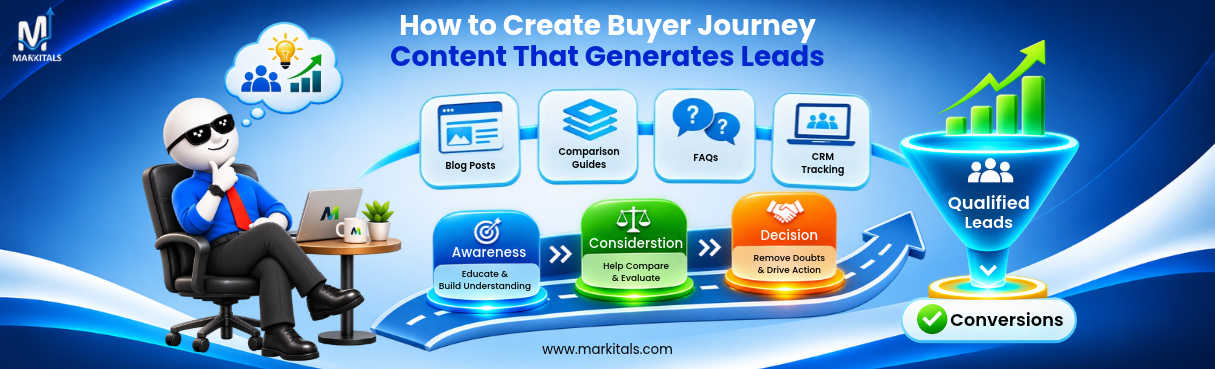
The Three Buyer’s Journey Stages
Two people can type nearly the same thing into a search bar and be in completely different places. A plant manager searching why a packaging line keeps jamming wants to understand the problem. The procurement head pricing a maintenance contract is already comparing suppliers. Content mapping means writing for each of them separately. A handy way to sort topics is by search intent: informational searches fit awareness, “best” and comparison searches fit consideration, brand searches fit decision.
| Stage | The buyer is wondering | What to publish | Next step |
|---|---|---|---|
Awareness |
What’s causing this, and does it need fixing now? |
Problem explainers, short videos, checklists |
Read a related guide or try a self-check |
Consideration | Which approach suits a business like ours? | Comparison guides, cost breakdowns, webinars, case studies | Download a buyer’s guide or watch a demo |
Decision | Can this company deliver, and what happens after we sign? | Specific service pages, onboarding outlines, FAQs, testimonials | Book a consultation or ask for a quote |
Nobody moves through this neatly, so each piece must stand alone. For how channels fit together, see our guide to full-funnel growth strategy.
Awareness Stage: Teach the Problem Before the Product
At this point nobody cares who you are, only what’s broken. Good awareness content starts with the symptom in the buyer’s own words (think “AC blowing warm air,” not “HVAC system diagnostics”) and helps them judge whether it’s urgent.
The best topics are hiding in plain sight: first-call questions, things customers keep getting wrong, and the search queries already sitting unread in your analytics. AI summaries in search results are also cutting clicks on many top-of-funnel searches, so a post that only defines something is easy to replace. A practical way to make a real decision isn’t.
Example: An HVAC Company and the Repair-or-Replace Question
Picture an HVAC company that gets the same call all summer. The AC is old and has been repaired before. Is it worth fixing again? Most would write a generic “signs you need a new AC” post and call it a day. This one writes the honest answer, showing how age, repair history, power bills and parts availability push the decision. For plenty of readers the guide says “repair it,” which is why they trust it. A printable checklist and a system-check offer close the page, so when they do need a new unit, they know who to call.
Consideration Stage: Help Buyers Compare Options Honestly
Once someone can name the problem, they shop for approaches before vendors. Build or buy? Phases or all at once? Hire or outsource? They want a straight read on what each route costs, how long it takes and where it tends to go sideways. Comparison guides, demos, practitioner webinars and case studies all help, especially case studies that explain why a client picked one route.
Honesty is what gets you remembered. Education stops being credible the moment it turns into a disguised sales pitch, and buyers can smell it. Telling someone your approach isn’t right for them feels like bad sales, but it’s how you get believed on everything else. Then there’s the size of the room. A typical complex B2B purchase involves six to 10 decision makers, so your contact needs something they can forward as is.
Example: A SaaS Company Explaining Rollout Options
Say you sell scheduling software to field-service companies. Your prospects aren’t losing sleep over features. They’re worried about switching while jobs are booked for next Tuesday. So you write a plain comparison of a phased rollout and a full switchover, plus a simple checklist the ops head can pass to IT and finance. Skip “book a demo” and offer a rollout planning session instead. The people who book it will have done much of the thinking for you.
Decision Stage: Remove the Doubts That Delay a Yes
By now there’s a shortlist, and the questions get practical. A little nervous, too. What’s included? What makes the price go up? Who’s our contact? If your site doesn’t answer those, the deal doesn’t die. It just stalls.
Make service pages specific about who they’re for and how the work runs, and show what the first few weeks look like. Build the FAQ from objections sales actually hears, not from what you wish people asked. Testimonials land better when the client sounds like the reader. If you offer a consultation, say what happens in it and what they walk away with, and keep one clear call to action per page.
Example: Preparing Manufacturing Buyers for an RFQ
Think of a precision components supplier selling to OEMs in the US and India. Too many of its RFQs arrive without tolerances, volumes or quality paperwork, and each gap means another round of emails. So it writes an RFQ prep guide covering which drawings to send, how volume and material move unit cost and lead time, and which inspection records it can supply, with the quote form right below. Procurement managers look organized in front of their bosses, and the supplier becomes the easy one to buy from.
Building a Buyer Journey Content Strategy That Connects
A lot of good content just sits there, read once and forgotten.
Back to the scheduling software example. The ops manager finds the rollout guide through search, then sees the cost breakdown in a LinkedIn ad a few days later. Grabbing the checklist from a landing page starts a short email sequence on common objections. After a few pricing-page visits, the CRM flags them and the sales rep gets a note on what they’ve read, so the first call starts with their questions.
None of that happens by accident. Content and lead generation campaigns have to be planned around the same buyer questions, and the ask should match the trust you’ve earned. A blog post can ask for an email. A proper buyer’s guide can ask for a meeting.
Measuring Content Marketing Conversions Beyond Page Views
Page views tell you people showed up, and that’s about all.
Start with qualified engagement: return visits, readers moving from an article to a service page, and traffic from companies that look like your customers. Then check assisted conversions, since educational content often starts a journey without getting credit for the last click. An attribution paths report in your analytics tool shows which channels turn up early, in the middle and late before someone converts. And if nobody reading an awareness post clicks “book a consultation,” that CTA is asking for too much, too soon.
In your CRM, log which content each lead touched, then compare close rates and sales cycles against leads who read nothing. Ask sales regularly which pieces they send and which questions keep coming up. That’s where aligning marketing and sales stops being a slide in a deck. In the same 2026 study of B2B buyers, only 35.2% said they used their own contact information on a vendor’s form, so a plain “How did you hear about us?” field earns its place.
Five Mistakes That Stall Educational Content Marketing
All awareness, no follow-through. Dozens of beginner posts, nothing for someone ready to choose. Traffic goes up and sales doesn’t notice.
Treating every reader like a hot lead. A sales call the morning after a checklist download is a quick way to lose someone. Wait for real signals, like repeat visits to pricing.
Saying what everyone else says. If you could swap in a competitor’s logo and nobody would notice, nobody will remember the post.
Ignoring what sales hears every week. Those objections are basically a content plan. Someone just has to pass them to marketing.
Leaving people with nowhere to go. A lonely “contact us” link isn’t a next step.
How Markitals Connects B2B Buyer Education With Conversions
At Markitals we don’t treat content as its own little project, because leads tend to slip through the gaps between teams and tools.
We start with strategy and a consultation, mapping your buyers’ questions at each stage from sales conversations, search data and CRM records. Then we create the content (blogs, case studies, LinkedIn posts, email sequences), run the performance marketing and lead generation campaigns that put it in front of the right people, and build the service pages, landing pages and forms that answer decision-stage questions.
Behind all that, CRM integration and marketing automation track what each lead has read and give sales context before the first call, and we help sales and marketing agree on what a qualified lead looks like. We work with businesses across the US and India and specialize in home services, SaaS, manufacturing, real estate and healthcare. The point of this integrated marketing setup is fewer leads lost between teams and a clear view of which content brings in revenue.
Frequently Asked Questions
What is the difference between TOFU, MOFU, and BOFU content?
Top, middle and bottom of the funnel, which line up with the awareness, consideration and decision stages: noticing a problem, weighing solutions, picking who to buy from.
What’s the difference between the buyer journey and the customer journey?
The buyer journey ends at the purchase. The customer journey continues into retention and loyalty, so content keeps working after the sale through onboarding emails, how-to guides and referral asks.
How does educational content generate qualified leads?
It pulls in people who already have the problem you solve, and what they read next shows how serious they are.
How do you measure content marketing conversions?
Use analytics and your CRM together: CTA clicks by stage, assisted conversions, and deals where the lead reads your content first. Then sanity-check it with sales.
Should you gate educational content behind a form?
Not the awareness stuff. Leave that open, and gate the deeper tools like templates or calculators, where an email address feels like a fair swap.
Let’s Find Out Where Your Buyers Get Stuck
Your sales team already hears the questions that make or break a deal. We can help you turn them into buyer journey content people actually use, get it in front of the right audience, build pages that make the next step obvious, and follow up on every inquiry. If your content gets read but doesn’t bring in leads, book a free consultation with the Markitals team and we’ll dig into where your buyers drop off.