
Your campaign is generating clicks. Your website is receiving enquiries. Your CRM contains leads. Sales is making calls. Yet revenue is not growing at the same rate. The problem may not be a lack of demand. It may be revenue leakage between the systems, messages, and teams responsible for converting that demand.
Imagine a B2B prospect who clicks a highly relevant advertisement, studies a service page, downloads a guide, and finally submits an enquiry. Marketing sees a high-intent visitor who has already revealed what they care about. Sales, however, receives only a name, email address, and phone number.
The salesperson begins with a generic introduction because the buyer’s journey did not travel with the lead. The prospect is asked to repeat information already shared through their actions. The first response arrives late, the follow-up content does not match the problem, and the opportunity gradually loses momentum.
The lead existed. The interest existed. The marketing investment had already done much of its work. Revenue was lost because the next stage did not continue the conversation properly.
That is revenue leakage.
For years, businesses have tried to solve slow growth by generating more traffic and more leads. In many cases, this adds volume to a disconnected system without correcting the gaps that prevent existing demand from becoming revenue. This article explains what revenue leakage means in a modern B2B pipeline, how to locate it, and how Markitals approaches the problem as a connected growth-system challenge.
What Is Revenue Leakage in Marketing and Sales?
Revenue leakage is the difference between the revenue a business could reasonably capture from the demand and opportunities it has created and the revenue it ultimately converts or retains. In marketing and sales, it occurs when qualified attention, buying intent, leads, opportunities, or existing customers lose momentum because the journey between stages is disconnected.
The traditional definition of revenue leakage often concentrates on billing mistakes, pricing errors, missed invoices, unnecessary discounts, and contract problems. Those financial issues remain important. However, a significant form of leakage begins much earlier, before an invoice can ever be raised.
It begins when the advertisement attracts the wrong audience, the landing page fails to continue the campaign promise, an enquiry enters the wrong CRM stage, sales responds without buyer context, a proposal receives no structured follow-up, or an existing customer is forgotten after the initial sale.
In other words, revenue leakage is not one isolated marketing or sales problem. It is the cumulative commercial effect of small breaks across the customer journey.
Traffic is not revenue. Leads are not revenue. Even proposals are not revenue. Revenue is created only when the stages between attention, trust, enquiry, follow-up, decision, and retention work as one connected system.
Revenue Leakage Examples: Where B2B Opportunities Actually Disappear
Revenue leakage rarely appears as one dramatic failure. It usually hides inside ordinary activity: a campaign report that looks healthy, an enquiry sitting in an inbox, a CRM record with incomplete information, or a proposal marked “follow up later.” Each event appears small, but together they create an expensive gap between marketing performance and business growth.
1. The Campaign Generated Traffic but Not the Right Buying Intent
A campaign may show strong impressions, clicks, and even a low cost per lead while still attracting people who do not match the company’s ideal customer profile. Marketing reports activity, but sales spends time contacting prospects with the wrong company size, location, budget, need, or decision-making authority.
The leak occurs before qualification. The company pays to attract attention that was unlikely to become revenue in the first place. More campaign volume only creates more work unless targeting, positioning, and qualification are corrected.
2. The Landing Page Broke the Promise Made by the Advertisement
A buyer clicks an advertisement about solving a specific operational problem but arrives on a broad service page filled with general agency language. The page does not reflect the original promise, provide relevant proof, or make the next step clear. The visitor leaves without enquiring.
This is a message-continuity leak. The advertisement succeeded in creating interest, but the website failed to carry that interest forward.
3. The Lead Reached Sales Without Its Context
A prospect visits several service pages, reads an industry article, returns through a remarketing campaign, and submits a form. The CRM captures contact details but not the pages viewed, campaign source, content consumed, stated problem, or level of intent.
Sales begins the conversation from zero. The buyer experiences a generic follow-up when the business already possessed enough context to make the outreach relevant. The leak happens during the marketing-to-sales handoff.
4. The Response Arrived After the Buying Window Had Moved
An enquiry is generated on Friday evening, assigned manually on Monday, and contacted later that afternoon. By then, the prospect has already spoken with competitors. The business may record the outcome as “not interested,” even though the original problem was not interest; it was response speed and ownership.
This is a lead-response leak. A qualified opportunity loses value while waiting for the internal process to begin.
5. The Proposal Was Sent but the Decision Journey Was Not Managed
A salesperson conducts a strong discovery call and sends a proposal. After that, follow-up consists of repeated messages asking whether the prospect has reviewed it. No relevant case study, objection-handling content, ROI explanation, stakeholder-specific message, or next-step process supports the buyer’s decision.
The pipeline may show an open opportunity, but commercially it is losing momentum. This is a mid-funnel nurture leak.
6. The First Sale Happened but the Relationship Stopped There
The business wins a customer and concentrates immediately on acquiring the next one. There is no structured onboarding communication, satisfaction check, renewal reminder, cross-sell journey, referral request, or reactivation strategy.
Revenue leaks after conversion because customer value is treated as a single transaction instead of a continuing relationship.
Across all six examples, the pattern is consistent: one stage performs its task, but the next stage does not receive or continue what came before. The failure is not always inside the pipeline itself. It is often in the connection between the parts of the growth system.
Why More Leads Do Not Automatically Create More Revenue
When revenue targets are missed, increasing lead generation is an understandable response. More traffic appears to create more opportunities, and more opportunities should create more sales. That logic works only when the conversion system underneath can handle the additional demand.
If lead quality is weak, more volume increases qualification work. If the website does not build trust, more traffic produces more exits. If CRM routing is slow, more enquiries create a larger backlog. If sales lacks context, more leads generate more generic conversations. If nurturing is missing, more proposals simply create more stalled deals.
This is why a company can improve advertising metrics without seeing a proportional improvement in revenue. Each platform is measuring its own stage, while the business outcome depends on movement across every stage.
Marketing may celebrate cost per lead. Sales may focus on meetings booked. Leadership may monitor pipeline value. Finance may review closed revenue. All four numbers can tell different stories because none, by itself, reveals where the customer journey is losing continuity.
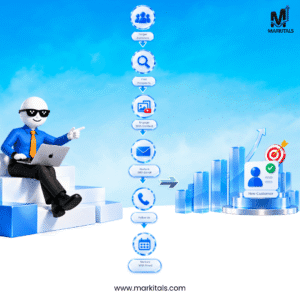
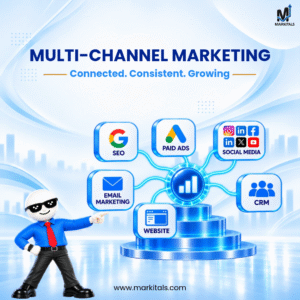
At Markitals, we view this as a growth-system problem. Ads, websites, content, CRM workflows, automation, email nurturing, and sales follow-up should not operate as separate services. They should function as connected parts of one revenue journey.
A business does not need more leads flowing into the same gaps. It needs a clearer route from first click to qualified conversation, sale, and long-term customer value.
Revenue Leakage Analysis: How to Find the Gaps
Revenue leakage cannot be fixed by studying the final sales number alone. A useful analysis must trace how prospects move between stages, identify where momentum falls, and determine whether the cause is traffic quality, message mismatch, process delay, missing context, weak nurturing, or unclear ownership.
The following five-step diagnostic gives B2B teams a practical place to begin.
Step 1: Map the Complete Customer Journey
Document the journey from the buyer’s perspective, beginning with the first source of awareness and continuing beyond the sale. Include advertising, organic search, social content, landing pages, forms, calls, CRM entry, lead assignment, discovery, proposals, nurturing, onboarding, retention, and referrals.
Do not map only the software. Map the real experience. A CRM stage may say “contacted,” but that does not reveal whether the message was relevant, whether the buyer received useful information, or whether a clear next step was agreed.
For every stage, define what the buyer is trying to understand, what action the business expects, and what information must pass to the next team or system.
Step 2: Measure Conversion Between Stages
Overall lead volume can hide weak movement inside the funnel. Measure the percentage of prospects progressing between meaningful stages: visitor to enquiry, enquiry to qualified lead, qualified lead to meeting, meeting to proposal, proposal to close, and customer to renewal or repeat purchase.
The lowest conversion rate is not automatically the most important leak. Consider volume, lead quality, deal value, sales-cycle length, and the business impact of the drop. A small percentage loss near the bottom of a high-value B2B funnel may cost more than a large percentage loss at the top.
Step 3: Review Speed, Context, and Ownership
For each handoff, determine how long the buyer waits, what information moves forward, and who owns the next action. These three questions expose many hidden leaks.
If an enquiry arrives, is it assigned immediately? Does the owner know the campaign source and the buyer’s stated interest? Is there a response-time expectation? If the first call is unsuccessful, does a nurture sequence begin? If a proposal stalls, is there a defined recovery action?
When ownership is described as “the team will handle it,” accountability is usually too broad. Each critical stage needs a named owner, a response standard, and a visible next action.
Step 4: Compare Channel Metrics With Revenue Outcomes
Connect advertising, website, CRM, and sales data so that campaign decisions are based on business outcomes, not only platform activity. A source that produces inexpensive leads may be expensive when judged by qualified-opportunity or customer acquisition cost. A source with a higher initial lead cost may create stronger revenue because its prospects convert more consistently.
Step 5: Estimate the Financial Impact
Once a leakage point is identified, estimate what it costs. Multiply the number of opportunities affected by the average potential deal value and the realistic conversion improvement available if that stage is repaired.
For example, if 40 qualified opportunities reach the proposal stage each quarter, the average deal value is $10,000, and only 10% close, the business wins approximately $40,000. Improving the close rate to 15% would produce approximately $60,000 from the same proposal volume. The $20,000 difference shows the potential value of fixing that stage before buying more traffic.
The Root Causes of Revenue Leakage
Pipeline leakage is rarely caused by one weak employee or one underperforming channel. It is usually the product of several structural gaps working together. Understanding those root causes prevents businesses from treating symptoms as solutions.
Disconnected Marketing Channels
Paid advertising, SEO, social media, content, email, and outbound activity may be managed independently. Each channel can produce acceptable metrics while presenting a different message, targeting a different audience, or directing prospects toward unrelated next steps.
The buyer does not experience separate channels. The buyer experiences one brand. When that experience feels fragmented, trust and momentum decline.
Weak Offer and Message Continuity
Revenue begins leaking when the promise that attracts attention is not continued through the landing page, sales conversation, proposal, and follow-up. A prospect interested in one specific outcome should not be pushed into a broad, generic company introduction.
Strong continuity means the buyer repeatedly sees evidence that the business understands the same problem that motivated the original click.
Incomplete Lead Qualification
Forms that collect too little information can leave sales without context. Forms that ask for too much can reduce conversions. The solution is not simply adding or removing fields; it is designing qualifications around the buying decision.
Useful information may include company type, requirement, location, urgency, budget range, service interest, and preferred contact method. Behavioural context—such as the original campaign, landing page, or downloaded resource—should also travel with the lead where appropriate.
Manual CRM and Follow-Up Processes
When lead entry, assignment, reminders, and nurturing depend entirely on someone remembering the next step, delay becomes part of the system. Manual processes may work at low volume but become unreliable as campaigns scale.
Automation should not replace human judgment. It should protect the moments that should never be missed: acknowledgement, assignment, reminders, nurture, escalation, and status visibility.
Marketing and Sales Measuring Different Outcomes
Marketing may optimize for leads while sales evaluates revenue potential. Without a shared definition of a qualified lead, both teams can perform according to their own targets while the overall business underperforms.
Alignment requires common stages, qualification rules, feedback loops, and reporting that connects campaign source to sales outcome.
Generic Nurturing for Different Buying Stages
A first-time website visitor, a qualified prospect, a proposal-stage decision-maker, and an inactive customer should not receive the same message. Generic email sequences ignore the questions and objections that change as a buyer moves closer to a decision.
Nurturing should help the prospect take the next logical step, not simply keep the brand visible.
A Website Built for Presence Instead of Progression
A visually appealing website can still leak revenue if its service structure is unclear, proof is difficult to find, pages load slowly, mobile experiences are weak, forms are confusing, or calls to action do not match buyer intent.
The website must do more than establish that the company exists. It must help the right visitor understand relevance, trust the offer, and move forward with confidence.
How to Prevent Revenue Leakage Across the Customer Journey
Preventing revenue leakage does not begin with buying another tool. It begins by defining how attention should move through the business and then designing the people, messages, systems, and measurements required to support that movement.
Build Campaigns Around Revenue-Relevant Audiences
Start with the ideal customer profile, buying role, priority problem, service fit, geography, company maturity, and likely decision criteria. Campaign targeting should reflect who is most likely to benefit and buy, not simply who is easiest to reach.
Creative and copy should qualify as well as attract. Clear positioning may reduce superficial response volume while improving the commercial quality of the enquiries generated.
Continue the Same Message After the Click
Landing pages should extend the promise made by the campaign. The headline, problem, outcome, proof, offer, and call to action must feel like one uninterrupted conversation. If the advertisement is industry-specific, the page should demonstrate relevant industry understanding. If the advertisement promotes an audit, the page should explain what the audit includes and what the buyer receives.
Carry Buyer Context Into the CRM
Sales should not receive a lead as an isolated contact record. Wherever practical and appropriate, the CRM should capture campaign source, service interest, form responses, landing page, previous engagement, qualification status, and agreed next action.
This context helps sales begin where marketing ended. It improves relevance, reduces repetitive discovery, and gives the buyer a more connected experience.
Automate the Process, Personalize the Conversation
Use automation to acknowledge enquiries, assign owners, create tasks, trigger reminders, begin relevant nurture journeys, and escalate overdue actions. Use people to understand nuance, build trust, handle objections, and guide decisions.
The strongest system is neither entirely manual nor entirely automated. It uses automation for consistency and human insight for persuasion.
Build Follow-Up Around Buyer Questions
Effective follow-up should answer the questions preventing the next decision. Early-stage prospects may need clarity about the problem. Qualified buyers may need evidence, implementation details, expected outcomes, or a relevant case study. Proposal-stage stakeholders may require ROI justification, risk reduction, timelines, and internal approval support.
“Just checking in” rarely advances a complex B2B decision. Useful follow-up creates a reason to continue the conversation.
Create a Closed Feedback Loop
Sales outcomes should flow back into marketing decisions. Campaign teams need to know which leads were qualified, which progressed, why opportunities stalled, which objections appeared repeatedly, and which sources produced customers rather than enquiries alone.
This feedback improves targeting, creative, content, landing pages, qualification, and budget allocation. Without it, marketing keeps optimizing the beginning of a journey whose ending it cannot see.
Protect Revenue After the Sale
The connected journey should continue through onboarding, service communication, customer education, satisfaction checks, renewals, cross-sell opportunities, and referrals. Retention is not separate from growth; it is one of the strongest ways to convert existing trust into durable revenue.
The Markitals Connected Growth System
Markitals approach revenue leakage by examining the complete path from attention to revenue rather than treating marketing services as isolated activities. The aim is not simply to produce more clicks, posts, forms, or dashboards. It is to make each component strengthen the next.
1. Attract the Right Demand
Performance marketing, content, SEO, social campaigns, and targeted outreach are aligned around the audiences, problems, and offers most relevant to the business. The goal is qualified demand—not activity without commercial direction.
2. Convert Attention Into Meaningful Action
Websites and landing pages continue the campaign message, establish credibility, reduce unnecessary friction, and direct different buyer types toward an appropriate next step. Conversion is designed into the experience rather than left to chance.
3. Connect Leads, Context, and Ownership
CRM structure and automation help capture important lead information, assign responsibility, organize stages, and protect response timing. The system gives marketing and sales a shared view of what has happened and what must happen next.
4. Nurture the Decision
Email, content, case studies, remarketing, and sales enablement are mapped to the questions buyers ask at different stages. Instead of sending more messages, the system delivers more relevant reasons to progress.
5. Measure Revenue Movement and Improve It
Reporting connects channel activity with lead quality, opportunities, conversions, and customer value. The team can then identify which stage needs improvement and optimize the system continuously.
This is why Markitals describes integrated marketing as a growth engine. Lead generation, performance marketing, branding, websites, CRM, automation, and content create more value when they operate as one connected commercial journey. This approach reflects Markitals’ published focus on qualified leads, measurable growth, integrated marketing, and ongoing improvement.
 One Connected System. Fewer Revenue Leaks.
Revenue Leakage in 2026: What Has Changed?
The fundamentals of conversion remain familiar, but the environment around them has changed. Buyers now research independently, move between more digital touchpoints, compare alternatives faster, and expect businesses to recognize context without forcing them to restart every conversation.
AI Has Increased Activity but Not Automatically Improved Continuity
AI can produce content, personalize messages, score leads, summarize calls, and automate workflows. Used well, it can reduce delays and support relevance. Used without a connected strategy, it can create more content, more outreach, more alerts, and more disconnected activity.
The question is not whether a business uses AI. The question is whether AI helps the buyer move forward and helps the team act with better context.
Buyers Form Opinions Before Speaking With Sales
Much of the B2B decision journey now happens through websites, search results, social content, reviews, videos, case studies, and peer recommendations. By the time a buyer submits an enquiry, they may already have a strong view of the company and its competitors.
This makes message continuity essential. The sales conversation must reflect the expertise and promise that attracted the buyer online.
Attribution Is More Complex
A buyer may first discover a company through social content, return through search, click a remarketing advertisement, read an email, and finally convert through a direct website visit. Crediting only the final touch hides the role of the earlier interactions.
Businesses need a practical view of the journey that combines attribution data with sales feedback rather than expecting one platform to explain the entire decision.
Efficiency Matters More Than Superficial Volume
Marketing teams are under growing pressure to connect spending with pipeline quality and revenue. This makes leakage analysis valuable because it identifies whether the next growth opportunity lies in acquiring more demand or converting existing demand more effectively.
In many businesses, the answer is both—but the sequence matters. Repairing the largest conversion gaps first helps additional marketing investment produce stronger returns.
Stop Adding Traffic to a Leaking Growth System
A thin pipeline can certainly limit revenue, but not every revenue problem is solved by filling the top of the funnel. When the customer journey is disconnected, additional traffic can hide the underlying issue by creating more activity without creating a dependable route to conversion.
The better starting point is to examine the complete system. Are campaigns attracting the right buyers? Does the website continue the message? Does the CRM preserve context? Is every lead assigned quickly? Does follow-up help buyers decide? Can marketing see what became revenue? Does the relationship continue after the first sale?
Revenue leakage becomes manageable when these questions are answered stage by stage and the largest gaps are given clear ownership.
At Markitals, we connect performance marketing, lead generation, websites, branding, content, CRM, and automation around one goal: helping the right demand move toward measurable business growth. The objective is not merely to generate another lead. It is to build a system capable of converting and retaining the opportunities marketing creates.
Your next growth opportunity may already be inside your pipeline. The first step is finding where it loses momentum.
Ready to identify the gaps between your traffic, leads, sales activity, and revenue? Talk to the Markitals team about a connected growth strategy for your business.
Frequently Asked Questions
What is revenue leakage?
Revenue leakage is the gap between the revenue a business could reasonably capture and the revenue it actually converts or retains. In marketing and sales, it occurs when prospects or customers lose momentum because of poor targeting, inconsistent messaging, website friction, slow lead response, missing CRM context, weak follow-up, or retention gaps.
What is pipeline leakage?
Pipeline leakage refers to leads and sales opportunities dropping out as they move through the marketing and sales process. Common leakage points include visitor-to-lead conversion, lead qualification, marketing-to-sales handoff, meeting follow-up, proposal progression, closing, renewal, and reactivation.
What is the difference between revenue leakage and revenue loss?
Revenue loss is a broad term covering revenue that does not materialize for any reason, including poor market fit, lack of budget, competition, or declining demand. Revenue leakage usually refers to preventable value lost despite existing interest, opportunity, delivery, or customer potential.
How can a business identify revenue leakage?
A business can identify revenue leakage by mapping the complete customer journey, measuring conversion between stages, reviewing response time and ownership, comparing channel metrics with CRM and sales outcomes, studying lost-deal reasons, and estimating the financial impact of the largest gaps.
What causes revenue leakage between marketing and sales?
Common causes include different definitions of a qualified lead, incomplete handoff information, delayed lead assignment, inconsistent follow-up, disconnected technology, weak sales enablement, and the absence of feedback from sales to marketing.
Can CRM automation prevent revenue leakage?
CRM automation can reduce preventable leakage by capturing information, assigning leads, triggering acknowledgements and tasks, supporting nurture sequences, and escalating overdue actions. However, automation works best when it supports a clear customer journey, relevant messaging, and defined ownership.
Should a business generate more leads or fix its conversion gaps first?
If the business has very little qualified demand, lead generation may be the immediate priority. If it already generates enquiries but experiences slow responses, poor qualification, stalled proposals, or low conversion, fixing the largest pipeline gaps first will usually help new marketing investment work harder.
How does Markitals help reduce revenue leakage?
Markitals connects lead generation, performance marketing, branding, websites, content, CRM, and automation into an integrated growth system. This helps businesses attract more relevant audiences, improve conversion journeys, preserve buyer context, strengthen follow-up, and measure marketing against meaningful business outcomes.
Author
Markitals
Markitals is a performance and integrated marketing agency that helps businesses strengthen digital presence, attract qualified leads, and build scalable growth systems through strategy, creativity, technology, and continuous optimization.
Website: https://markitals.com/