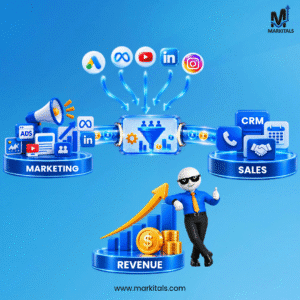
Most businesses are already doing multi-channel marketing, whether or not they call it that. They rank for a few terms on Google, run Google Ads, advertise on Meta or LinkedIn, post on social media, send the occasional email campaign, keep a website up to date and manage enquiries in some kind of CRM.
Technically, that’s multi-channel. Whether it’s a multi-channel strategy is a different question.
We regularly see companies with respectable numbers in every dashboard and a sales calendar that still won’t fill. Each channel reports on itself. Nobody reports on whether they’re speaking to the same buyer, passing along what they learn and pointing people towards the same next step. That gap is usually where the money goes.
Below: what multi-channel marketing actually is, how the main channels can support one another, and how to connect them without tearing up what you already have.
What Is Multi-Channel Marketing?
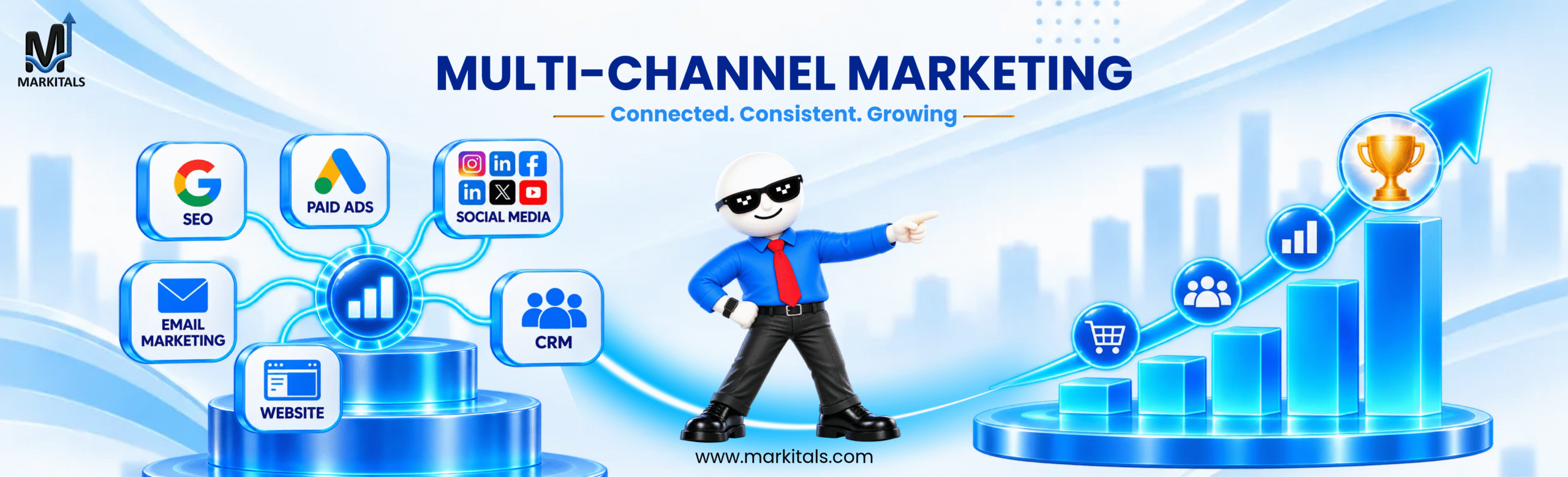
Multi-channel marketing means using several marketing channels to reach, engage, nurture and convert customers across their buying journey: typically SEO, paid search, paid and organic social, your website, content, email, CRM and automation, direct outreach and sales conversations.
Multi-channel presence
A company is active on several channels, each planned and judged on its own terms, often by different people or agencies.
Connected multi-channel marketing
The same channels share audience insight and performance data, keep the message consistent and feed one coordinated customer journey. This is usually what people mean by integrated or cross-channel marketing.
Most of this article is about getting from the first to the second.
Multi-Channel vs Omnichannel Marketing
The two terms get used interchangeably, and in practice they overlap a great deal.
Multi-channel marketing describes reaching customers through several channels. Omnichannel marketing goes a step further: the channels are designed so the experience stays continuous as a customer moves between them. Someone who browsed a product on mobile, abandoned a form and later called the office would be recognised at each step, with the context carried along.
They aren’t rival strategies. Most businesses start with multi-channel activity and gradually add the connections that make it feel omnichannel to the customer. You don’t need full omnichannel capability to get far more from the channels you already run.
Using More Channels Is Not the Same as Having a Strategy
Running SEO, Google Ads, Meta campaigns, LinkedIn, email and a website at the same time doesn’t guarantee that any of them is coordinated with the others.
Take a commercial cleaning company. Its Google Ads account converts searches for “post-construction cleaning” at a far better rate than its general office-cleaning terms, and the leads are larger jobs. In a coordinated setup, that finding leaves the ads account. SEO prioritises a proper post-construction service page over the broad guide it had planned, retargeting speaks to site managers rather than office administrators, and sales knows a builder’s enquiry deserves more time than a single-office quote.
Same channels. Something learned in one changed what three others did.
What Happens When Marketing Channels Work Separately?
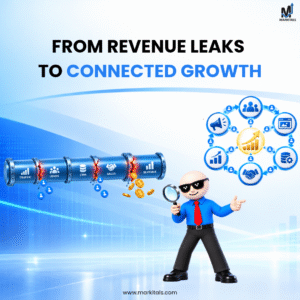
The leaks are rarely dramatic. They’re small, they repeat every month, and they’re easy to miss because each one sits on the boundary between two teams.
Paid campaigns hit their cost-per-lead target while sales quietly marks most of those leads as unqualified. Nobody is wrong, exactly; they’re measuring different things, and the two numbers never meet in the same report.
A blog post reaches page one and pulls in thousands of visits a month from people who will never buy. Search Console calls it a success. Commercially it does almost nothing.
A social campaign gets good engagement and then stops, with no retargeting audience and no next step. A lead arrives in the CRM stripped of the campaign and pages that brought them in, so the first sales call starts from zero. And sales hears the same objection for six months while content and ads talk about something else.
None of these shows up as a failing channel. They show up as a pipeline nobody can quite explain.
How Customers Actually Move Across Marketing Channels
Buyers don’t experience your org chart. They don’t know or care that LinkedIn belongs to one person and Google Ads to an agency. They experience one company.
A fairly ordinary B2B path looks something like this. An operations manager notices a LinkedIn post one Tuesday about the hours her team loses to manual reporting. She doesn’t click. Two weeks later, after a painful month-end close, she searches the problem on Google, recognises the company name in the results and reads an article, then a service page. Then she leaves. A remarketing ad follows her for a few days, but she’s busy. When her manager asks for options, she searches the brand, downloads a guide, gets a follow-up email and books a call, mentioning that a colleague had recommended them too.
Most analytics setups would credit branded search. Yet branded search created nothing here. It collected demand that a post, an article, an ad, an email and an untracked conversation had built over a month.
How SEO, Ads, Social Media and Other Channels Work Together
The real value of a multi-channel marketing strategy sits in a handful of specific relationships between channels. These are the ones that matter most for most businesses.
SEO + Paid Search
Google Ads and SEO are usually reported separately, even when they’re chasing many of the same searches. One clarification first, because it comes up often: running Google Ads doesn’t improve your organic rankings. The two systems are independent.
What paid search offers SEO is information, and it offers it quickly. Within weeks, the search terms report separates buyers from students and job seekers, ad tests show which commercial language works, and landing-page tests reveal whether “free site survey” beats “request a quote” or whether some regions convert far better than others. SEO can take months to surface the same lessons. If paid search keeps uncovering the same high-intent theme, the content team should be building long-term visibility around it.
It has limits: people behave differently with ads than with organic listings, and small accounts may not produce enough data. Where the overlap is real, strong organic rankings can reduce what you pay in some search categories, freeing budget for competitive terms and launches.
Social Media + Search
Plenty of people see a company on social media and never click. Some later search the brand, or search the post’s topic and recognise the name in results. Others type the URL directly or return weeks later through remarketing.
Social engagement doesn’t lift your Google rankings; the effect is on people, not the algorithm. What you can watch is whether branded searches, direct visits and returning users move while a social campaign runs, and whether sales starts hearing “I’ve seen your posts” on calls.
Content + Paid Media
One strong content idea can do several jobs. A frank article on what implementation really involves can rank in search, become LinkedIn posts, supply an ad angle, sit in an email sequence and give sales something to send after a call. The idea stays the same; the format changes.
Paid media also works in the other direction. A small, inexpensive test can show whether a message or topic earns attention before you commit weeks of organic content work to it.
Advertising + Landing Pages
Every channel eventually sends people to your website, which is why the website is where disconnection becomes most visible. A few examples we come across regularly:
An ad offers a 30-minute consultation; the page behind it says “Contact Us” above a general enquiry form and never mentions the consultation. Someone searching for a specific service clicks an ad and lands on the homepage, left to find it themselves. A LinkedIn campaign aimed at CFOs sends them to a page written for IT teams, full of integration detail and silent on cost. And a mobile visitor meets a twelve-field form before they’ve understood the offer.
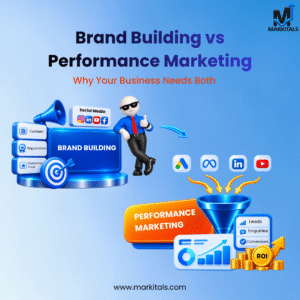
Each wastes money that was well spent right up until the click, which is why performance marketing has to include the page as well as the ad.
Email + CRM + Automation
These channels exist to preserve context and act on it. A visitor who downloaded an implementation guide shouldn’t get the same follow-up as someone who viewed pricing three times this week.
Most businesses don’t need elaborate automation to begin with. They need the basics working: the lead’s source captured accurately, CRM stages that sales and marketing both agree on, buyer context stored against the contact, a named owner for every lead, timely follow-up, and sales outcomes returned to marketing. For local service businesses in particular, the speed of lead follow-up can matter as much as any workflow. Without those foundations, automation mostly sends more email to the wrong people, faster.
How Do You Measure Multi-Channel Marketing?
Measuring one campaign is fairly straightforward. Measuring multi-channel marketing is harder, because a single customer may touch four or five channels before converting, and each platform tends to claim the conversion for itself.
Last-click attribution flatters branded search and direct traffic. Platform-reported conversions overlap and often add up to more sales than you made. Assisted-conversion reports help, but only see what’s trackable, and people switch devices, decline cookies, see ads without clicking and hear about you from colleagues.
No attribution model gives perfect visibility. The practical answer is to put several imperfect sources side by side: analytics, campaign data, CRM outcomes, sales feedback, and a simple “How did you hear about us?” field read with some scepticism. Then ask a better question. Not “which platform got the last click?” but “which combinations of touchpoints keep appearing in qualified opportunities and customers?”
A Multi-Channel Marketing Example: One Buyer Problem, Several Channels
Consider a company selling appointment-scheduling software to physiotherapy clinics. It’s a hypothetical, but the pattern is common.
Sales keeps hearing the same hesitation from otherwise keen clinic owners: moving patient records out of the old system sounds risky and slow. For months that objection lives only in call notes, while marketing publishes another article on reducing no-shows because a keyword tool says it has volume.
Once someone connects the two, almost every channel changes. Content writes a frank, search-focused guide to switching systems. The main Google Ads landing page gains a section on migration support, and new ad copy addresses the worry directly. The onboarding lead posts on LinkedIn about a recent switch. Clinics that viewed pricing without booking get a migration email and a matching retargeting ad. A CRM field records whether migration came up on the first call, so marketing can see whether the new material moves those deals. And sales finally has something concrete to send.
No new channel was added. One buyer problem, surfaced by sales, gave seven touchpoints something more useful to say.
Benefits of a Connected Multi-Channel Marketing Strategy
None of these benefits arrives automatically. They depend on execution, and on someone owning the connections between channels.
Visibility across the whole journey
You stay present while the buyer researches, compares and decides.
Message continuity
The buyer meets the same problem, promise and next step wherever they arrive from.
Better use of the data you already have
Search terms guide content, sales objections shape ad creative, and CRM outcomes refine targeting.
Less wasted spend, and clearer diagnosis
When channels are connected, you can tell whether poor results come from traffic quality, the landing page, qualification, follow-up or a broken handover, instead of simply cutting the channel that looks weakest.
Better lead quality and less dependence on one channel
Campaigns can be optimised towards leads that become opportunities, and with several channels carrying the load, a change on one platform hurts less.
How to Build a Multi-Channel Marketing Strategy
You don’t need a reorganisation or a new tech stack to start. This sequence works for most businesses.
Step 1: Understand how customers actually buy
Map where buyers discover you, research, compare, enquire and return. Analytics and the CRM show part of it; conversations with recent customers usually show the rest, often to the team’s surprise.
Step 2: Give each channel a job
Not every business needs every platform. SEO might capture existing demand, paid search reach high-intent buyers faster, social build credibility and retargeting audiences, and email nurture longer decisions. A local plumber may live on search; a B2B software firm with a six-month cycle may get more from LinkedIn and email.
Step 3: Align the core message
The ad, the landing page, the follow-up email and the opening of the sales call should feel like one conversation, not four campaigns.
Step 4: Connect the data that matters
Start small: lead source, campaign, conversion, lead quality, opportunity and sale. Consistent campaign tagging and a CRM that actually records source get you most of the way.
Step 5: Create feedback between teams
Marketing should know which leads sales accepts, which objections recur and why deals stall. Sales should know what each prospect read and which offer brought them in. A short monthly session where each channel shares one lesson is often enough to start.
Step 6: Measure business outcomes
Use platform metrics day to day, but judge the strategy on qualified leads, opportunities, acquisition cost, pipeline and revenue.
How Markitals Approaches Multi-Channel Marketing
Most of the problems described above come from handovers that nobody owns: SEO with one supplier, paid media with another, the website with a freelancer and the CRM with nobody in particular.
At Markitals, we plan SEO, performance marketing, social media, content, conversion-focused websites, email, CRM automation, lead generation and analytics around the customer journey rather than as separate deliverables. That means a shared view of the audience, messaging that carries from ad to page to follow-up, performance data the whole team can see, and optimisation based on what turns into business. It doesn’t replace good execution in each channel; it stops that execution being wasted at the boundaries.
Multi-Channel Marketing in 2026: What Has Changed?
The principles haven’t changed much. The conditions around them have.
Research journeys are more fragmented
Buyers move between search, social platforms, video, AI-assisted research tools, reviews and recommendations. Less of that is trackable, and more of the decision happens before any form is filled.
AI has made content cheap, and consistency valuable
Producing content is far easier than it was, which raises volume without making any of it more useful. Relevance and genuine buyer context are what now set content apart.
First-party data matters more as attribution gets harder
Privacy controls and multi-device journeys mean platform reporting sees less than it used to. Your own CRM records, website behaviour, sales notes and customer feedback help fill those gaps, which is one more reason to get the CRM basics right.
Channel quality beats channel count
Adding TikTok or another platform because a competitor has usually just adds reporting. Each channel needs a defined job.
Frequently Asked Questions
What is multi-channel marketing?
Multi-channel marketing is the use of several marketing channels, such as SEO, paid search, social media, email, your website and CRM, to reach, engage and convert customers across their buying journey. It works best when those channels share information and support the same customer journey rather than running independently.
What is an example of multi-channel marketing?
A business might publish a search-optimised guide, promote it on LinkedIn, retarget readers with an offer, follow up downloads by email and give sales the context of what each lead read. Each channel plays a different role in moving the same buyer forward.
What is the difference between multi-channel and omnichannel marketing?
Multi-channel marketing means reaching customers through several channels. Omnichannel marketing designs those channels so the experience stays continuous as customers move between them, with context carried from one to the next. Many businesses start with multi-channel activity and build towards omnichannel over time.
Why is multi-channel marketing important?
Buyers rarely decide after a single interaction. They search, see ads, read content, check reviews and talk to colleagues. A coordinated multi-channel approach keeps your business visible and consistent throughout that process instead of relying on one touchpoint to do all the work.
How do SEO and paid advertising work together?
Paid search produces fast data on which search terms, messages and offers convert, which can guide SEO and content priorities. Strong organic visibility can then reduce reliance on paid clicks for some searches. Google Ads does not directly improve organic rankings.
How should businesses measure multi-channel marketing?
Combine analytics, ad platform data, CRM outcomes, sales feedback and customer-reported source, and focus on qualified leads, opportunities, customer acquisition cost, pipeline and revenue. No attribution model is perfect, so look for touchpoint combinations that repeatedly appear in won deals.
Does every business need to use multiple marketing channels?
Not every business needs every channel. The right mix depends on how your customers buy. A local service business may rely mainly on search and reviews, while a B2B company with a long sales cycle may need LinkedIn, content and email as well. Each channel should have a clear job.
How does Markitals help with multi-channel marketing?
Markitals plans SEO, performance marketing, social media, content, websites, email, CRM automation and analytics around one customer journey, so messaging, data and lead handovers stay connected and campaigns can be optimised towards qualified business outcomes.
Author
Markitals
Markitals is a performance and integrated marketing agency that helps businesses connect SEO, paid media, content, websites, CRM and automation into growth systems built around how their customers actually buy. The team works across strategy, campaign execution and ongoing optimisation for clients in the US and India.
Website: https://markitals.com/